

What Does a Typical Day Look Like for a Dominican?

What is everyday life really like in the Dominican Republic? Beyond the white-sand beaches, all-inclusive resorts and tropical landscapes, daily life follows its own rhythm, shaped by work, family, food, music and social connections.

For many Dominicans, a typical day begins early, includes a substantial lunch, and ends with time spent with family or friends. In neighbourhoods across the country, small shops open their doors, motorcycles fill the streets, music plays from homes and businesses, and people stop to chat with their neighbours.

Of course, life in Santo Domingo is different from life in a small fishing village or a rural community. Not everyone follows the same schedule, and working hours vary considerably. Nevertheless, certain customs offer an interesting insight into everyday Dominican life. 

Early Morning: Coffee, Breakfast and Getting Ready for the Day

In many Dominican households, the day begins early. Workers prepare for their jobs, children get ready for school, and local businesses begin opening their doors.

Coffee is an important part of the morning routine. Dominican coffee is often served strong and sweet, and a cup of coffee can be a simple way to start the day or share a moment with family before leaving home.

Breakfast varies from household to household, but one of the country’s best-known traditional dishes is mangú. Made from boiled and mashed green plantains, it is often served with eggs, fried cheese and Dominican salami. This combination is sometimes known as los tres golpes, meaning “the three hits.”

Other people prefer bread, eggs, a quick pastry or a lighter breakfast, depending on their schedule and budget.

By early morning, streets become busier as people commute to work, take children to school or open their shops. In towns and cities, you may see motorcycles, public minibuses and cars sharing the roads while street vendors prepare food and sell everyday essentials. 

Morning: Work, School and Local Businesses

For most people, weekdays are organised around work, education and family responsibilities.

The Dominican economy includes tourism, hospitality, retail, agriculture, construction, manufacturing, transport and many other sectors. In destinations such as Punta Cana and Bayahibe, hotels, restaurants, excursion companies and other tourism-related businesses play an important role in local employment.

In Santo Domingo and Santiago, office workers, shop employees, entrepreneurs and professionals follow routines more familiar to those living in other large cities.

Small neighbourhood businesses are also an important part of everyday life. Grocery shops, bakeries, hair salons, workshops and family-run stores serve local residents throughout the day. These places are not simply somewhere to buy something; they can also be places where neighbours exchange news and catch up with one another.

School routines vary depending on the institution and its schedule. Some children attend classes in the morning, while others follow different timetables. After school, children may spend time with friends, participate in sports or help with responsibilities at home.

For visitors, this is a good time to look beyond the resort areas and observe the everyday activity of Dominican towns. A local market or neighbourhood bakery can reveal a different side of the country from the one found in tourist brochures. 

Lunchtime: Why Is Lunch So Important in the Dominican Republic?

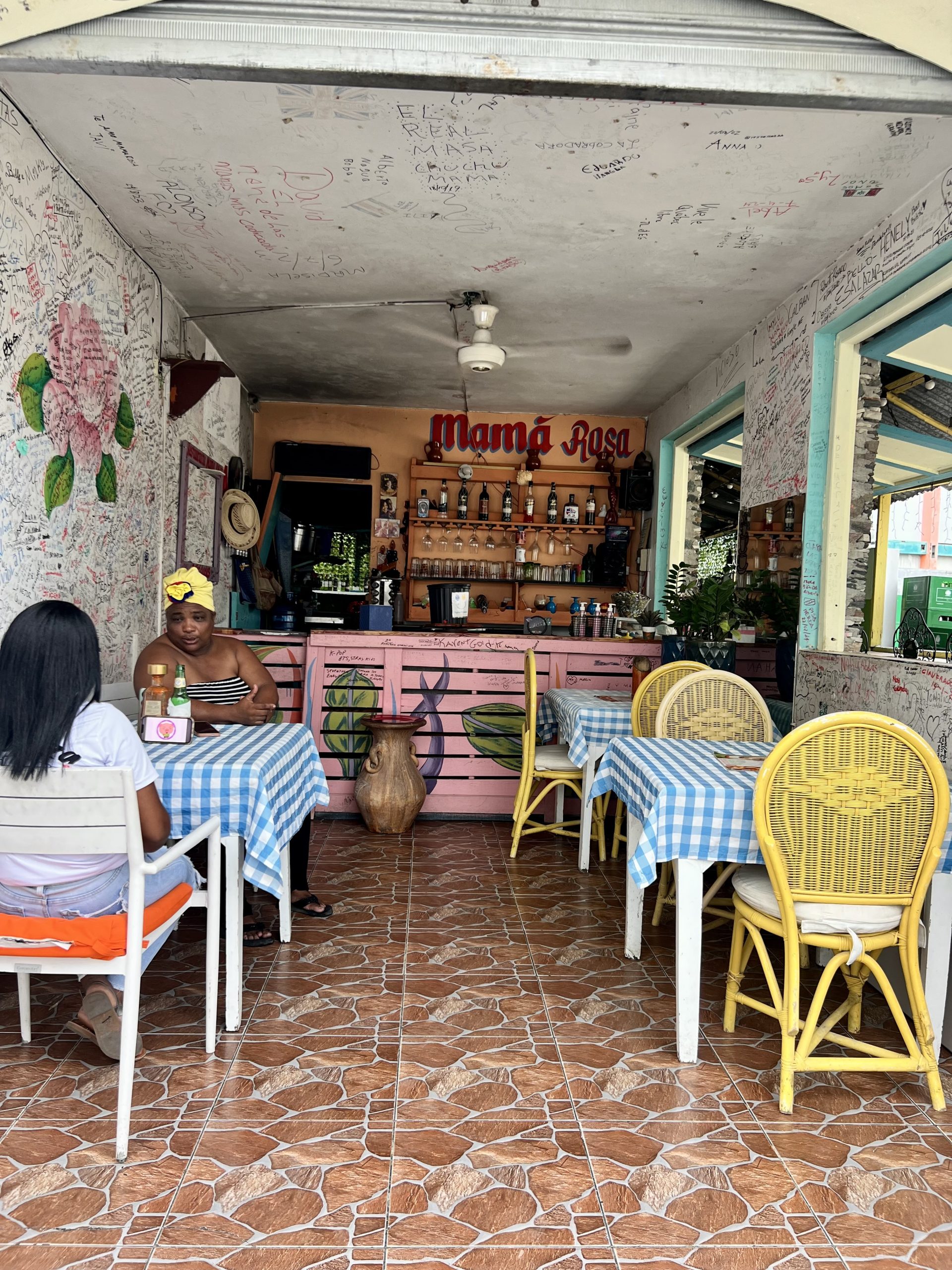
Lunch is traditionally the main meal of the day for many Dominicans. It is often more substantial than dinner and may be eaten at home, at work or in a local restaurant known as a comedor.

One of the country’s most emblematic meals is la bandera dominicana, literally “the Dominican flag.” It typically consists of white rice, stewed beans and meat, often accompanied by salad, fried plantains or avocado.

The exact ingredients depend on the household, the region and what is available. Chicken, beef, pork and fish all feature in Dominican cuisine, alongside dishes made with plantains, cassava and other local ingredients.

A typical lunch might include rice, beans, stewed chicken and a small salad. It is simple, filling and closely associated with home cooking.

For people working away from home, comedores provide affordable, home-style meals. These establishments are popular with workers and residents who want a proper lunch without the cost of a formal restaurant.

In some workplaces, people have time to return home for lunch or take a longer break. However, this is not universal: many employees work through a more conventional schedule, particularly in offices, hotels and businesses serving customers throughout the day.

Food is also an important part of social life. Sharing a meal offers an opportunity to talk about the day, exchange news and spend time with relatives or colleagues. 

Afternoon: Back to Work, Errands and Everyday Responsibilities

After lunch, the day continues with work, school, shopping and household responsibilities.

In warmer parts of the country, the afternoon heat can make outdoor activities less comfortable, especially during the hottest hours. Some people adjust their routines accordingly, choosing to run errands earlier or later in the day when possible.

In tourist destinations such as Bayahibe and Punta Cana, afternoons can look very different depending on someone’s occupation. Excursion crews may be returning from trips, restaurant employees may be preparing for evening service, and hotel staff may still be working while visitors relax by the pool or on the beach.

Outside the tourism sector, people continue with the ordinary demands of daily life: managing businesses, commuting, studying, caring for children and shopping for groceries.

This is also when local shops and small businesses remain important meeting points. A quick stop at a neighbourhood store can turn into a conversation with a friend or neighbour.

The rhythm of the afternoon therefore depends less on a single national routine than on where people live, what they do for work and the responsibilities they have at home. 

Late Afternoon and Evening: Family, Friends and Social Life

As the day cools down, streets and neighbourhoods can become lively again. People return from work, children play, families prepare dinner, and friends meet after their daily responsibilities.

Family relationships are an important part of Dominican social life. Spending time with parents, grandparents, siblings, cousins and other relatives is common, although the amount of time available varies from family to family.

In many communities, socialising happens outdoors as well as indoors. People may sit outside their homes, talk with neighbours, visit a relative or stop at a local colmado.

A colmado is a small neighbourhood grocery shop selling everyday products, drinks and snacks. Some also become informal social gathering places, particularly in the late afternoon and evening. Depending on the establishment, you may hear music, see people chatting or find a group watching a baseball game.

Music is another familiar part of Dominican life. Merengue and bachata are two of the country’s best-known musical styles, and they can be heard in homes, cars, bars and local celebrations. Not everyone dances or listens to the same music, of course, but these genres remain important parts of the country’s cultural identity. 

Who are we?

Tropical Evasion is a local agency specialized in Tailor-made private tours across the Dominican Republic.
We offer authenticity, comfort, and safety, with tailor-made itineraries and personalized support.

📞 WHATSAPP CONTACT:
+1 (829) 424-1391

🔍 Learn more

Joy altos de chavon

Embark on a Custom Adventure !

Discover the Dominican Republic differently with our private tours, designed to help you experience the essential… and the unexpected.
Multi Days Trips

Experience unforgettable excursions!

Discover the Dominican Republic in a different way – far from the crowds – with our private tours or small-group day trips. Explore hidden beaches, authentic villages, and breathtaking landscapes for a truly unique travel experience.
Days Trips

What Do Dominicans Eat for Dinner?

Dinner varies widely, but it is often lighter than lunch in households where the main meal is eaten at midday.

Some families have leftovers from lunch, while others prepare sandwiches, eggs, plantains, soup or another simple meal. Rice, beans, chicken and other familiar ingredients may also appear again at dinner.

Traditional dishes remain important, but modern Dominican eating habits are diverse. Pizza, burgers, pasta and international cuisine are popular too, particularly in larger cities and tourist areas.

In coastal communities, fish and seafood may feature more prominently, depending on local availability and household preferences.

Food is not just about what is served. Eating together can provide an opportunity to reconnect after a busy day, discuss family matters and make plans for the following day. 

How Do Dominicans Spend Their Free Time?

Free time depends on age, work schedules, income and where someone lives. Nevertheless, several activities have a visible place in Dominican culture.

Baseball: More Than Just a Sport

Baseball is one of the Dominican Republic’s most popular sports. The country has produced many internationally recognised professional players, and local baseball has a strong following.

During the Dominican winter league season, games can become major social events, with families and friends following their favourite teams. Children and teenagers also play baseball in neighbourhoods and local sports programmes.

Football, basketball, volleyball and other sports are popular too, particularly among younger generations.

Music and Dancing

Merengue and bachata are closely associated with Dominican culture. People may enjoy them at family celebrations, bars, concerts or informal gatherings.

Dancing is not limited to professional performers or nightlife venues. It can be part of birthdays, weddings, holidays and ordinary social occasions.

Visitors interested in local culture can look for live music events or dance venues rather than limiting their evenings to international-style bars.

Beaches, Rivers and Outdoor Activities

The Dominican Republic’s geography offers plenty of opportunities for outdoor recreation. Depending on where they live and what they can afford, people may spend weekends at beaches, rivers, parks or countryside destinations.

For residents of coastal towns, the sea can be part of everyday life rather than an occasional holiday attraction. In inland communities, family outings may involve rivers, mountains or visits to relatives in other towns.

However, not every Dominican has easy access to these activities. Work commitments, transport and household budgets all influence how people spend their free time.

Dominoes and Neighbourhood Gatherings

Dominoes are a familiar pastime in many Dominican communities. Games can take place outside homes, in neighbourhood gathering spots or during family get-togethers.

These informal moments are part of what makes everyday life interesting to observe: socialising does not always require a formal plan or an expensive activity. 

What Is Family Life Like in the Dominican Republic?

Family plays an important role in Dominican society. Relatives often help one another with childcare, practical responsibilities, celebrations and everyday challenges.

Extended families may live close to one another, making it easier to visit frequently or share meals. In other households, relatives may live in different cities or abroad while remaining closely connected through calls, messages and visits.

Birthdays, weddings, religious celebrations and public holidays can bring relatives together for food, music and conversation. Christmas and Easter are particularly important periods for many families, although traditions differ according to personal beliefs and circumstances.

It is important not to assume that every household has the same structure or follows the same traditions. Dominican society is diverse, and family life is shaped by individual choices, economic circumstances, religion and generational differences.

Still, relationships and mutual support are often central to how people organise their personal lives. 

Is Daily Life Different in Santo Domingo, Punta Cana and Bayahibe?

Yes. Although many cultural traditions are shared, everyday life changes considerably depending on location.

Santo Domingo: A Busy Urban Lifestyle

As the capital, Santo Domingo is a major centre for business, government, education, shopping and entertainment.

Many residents commute to work or school, navigate busy roads and organise their days around urban schedules. The city offers a wide variety of restaurants, shopping centres, cultural attractions and nightlife, alongside traditional neighbourhood businesses.

Life here can feel fast-paced, particularly during rush hour.

Punta Cana: Tourism and Local Communities

Punta Cana is internationally known for its resorts, beaches and tourism industry. For many local residents, however, daily life revolves around work, commuting, family and the services that support the destination.

Hotel employees, drivers, restaurant workers, excursion staff and other tourism professionals may work shifts that differ from conventional office hours. Their routines are shaped by visitor demand, transport and the needs of their workplaces.

Beyond the resorts, local neighbourhoods have their own shops, schools, businesses and community life.

Bayahibe: A Coastal Town with a Strong Tourism Connection

Bayahibe is a smaller coastal community where tourism, fishing, restaurants, diving and boat excursions contribute to local life.

For people working in tourism, the day may begin early with preparations for excursions, checking equipment or welcoming visitors. Others open businesses, work in restaurants or go about their usual professional and family responsibilities.

The sea is a visible part of the town’s identity, but Bayahibe is more than a holiday destination. It is also a place where residents work, study, raise families and maintain everyday routines.

For travellers, spending time in the town beyond the main excursion departure points can provide a better understanding of its local atmosphere. 

What Can Visitors Learn from Everyday Dominican Life?

One of the best ways to understand the Dominican Republic is to experience ordinary moments rather than focus exclusively on major attractions.

Visit a local market, eat lunch at a neighbourhood comedor, try a traditional breakfast or explore a town with respect for the people who live there. If an opportunity arises, attending a local music event or watching a baseball game can also provide insight into Dominican culture.

Learning a few Spanish expressions can make these interactions easier. A friendly greeting, a polite question or a simple muchas gracias can go a long way when communicating with local residents.

Remember that people are going about their daily lives, not performing a cultural experience for visitors. Ask before taking photographs of individuals, respect private spaces and support local businesses when you can.

The most rewarding encounters are often the simplest: sharing a meal, learning the name of a local dish or having a conversation that gives you a different perspective on the country. 

Discover the Dominican Republic Beyond the Resorts with Tropical Evasion

A typical day in the Dominican Republic is about much more than sunshine and beaches. It includes early mornings, coffee, traditional food, work, family responsibilities, music and the social connections that bring communities together.

Whether you are visiting Santo Domingo, exploring the coastal town of Bayahibe or staying in Punta Cana, taking time to understand local life can make your trip more meaningful.

At Tropical Evasion, we help travellers discover the Dominican Republic through practical travel advice, local destinations and experiences beyond the usual tourist itinerary. Explore the country, discover its culture and make the most of your stay. 

Explore the Dominican Republic with Tropical Evasion

Whether you’re passionate about nature, cultural discoveries, or sea adventures, the Dominican Republic is full of treasures waiting to be explored. From the paradise beaches of Saona to the breathtaking peaks of Montaña Redonda, every excursion is an invitation to escape.

With Tropical Évasion, enjoy an exclusive and immersive experience in small groups, aboard luxury boats or off-road vehicles, for unforgettable moments far from traditional tourist routes.

Book your excursion now and let yourself be amazed by the authenticity of the Dominican Republic!

Follow us on social media…

Join us on Instagram and Facebook and dive into the heart of our excursions in the Dominican Republic!

With breathtaking landscapes, unforgettable encounters, and moments of pure escape, experience our adventures through images and never miss an update.

Vivre la République Dominicaine ! 

🇩🇴 La République dominicaine, ce n’est pas seulement des plages de rêve ! 🌴

💃 C’est danser la bachata avec les locaux.
🚤 Explorer des coins de paradis.
🌊 Plonger dans des eaux turquoise.
❤️ Faire des rencontres, vivre des aventures et découvrir une culture vibrante !

✨ Chez Tropical Évasion, on te fait découvrir la République dominicaine autrement, loin des vacances classiques !

Et toi, tu es plutôt 🌴 plages paradisiaques ou 💃 immersion locale ?

EXPERIENCE THE DOMINICAN REPUBLIC 🇩🇴

🇩🇴 The Dominican Republic is so much more than just dream beaches! 🌴

💃 It’s dancing bachata with the locals.
🚤 Exploring hidden slices of paradise.
🌊 Diving into crystal-clear turquoise waters.
❤️ Meeting amazing people, living unforgettable adventures, and discovering a vibrant culture!

✨ At Tropical Évasion, we take you beyond the typical vacation to experience the real Dominican Republic!

And you, are you more into 🌴 paradise beaches or 💃 authentic local experiences?

#instareel #evaneos #voyage #republiquedominicaine #dominicanrepublic

…

16 0
Et si le paradis se découvrait aussi à cheval ? 🌴🇩🇴

✨ NOUVELLE EXPÉRIENCE EN RÉPUBLIQUE DOMINICAINE !

Imagine… traverser les champs de canne à sucre à cheval, rejoindre les eaux de la magnifique rivière Chavón et vivre un moment magique en te baignant avec ton cheval ! 🐎💦

Et parce qu’on aime te faire vivre des expériences qui sortent de l’ordinaire, on te propose 2 façons de profiter de cette aventure :

☀️ Balade en journée | 9h30 – 13h00
🐎 Balade à cheval, baignade dans la rivière Chavón et repas inclus.

🌅 Expérience Sunset | 15h30 – 21h00
🐎 Balade à cheval, baignade, coucher de soleil, dîner et soirée autour d’un feu de camp 🔥✨

❤️ Des paysages magnifiques, des chevaux et des souvenirs inoubliables… loin des excursions classiques !

👇 Alors, tu es plutôt TEAM JOURNÉE ☀️ ou TEAM SUNSET 🌅 ?

📩 Écris-nous en privé pour réserver cette nouvelle aventure !

What if paradise was even better on horseback? 🌴🇩🇴

✨ NEW EXPERIENCE ALERT! ✨

Imagine riding through endless sugarcane fields, exploring breathtaking tropical landscapes, and swimming with your horse in the stunning Chavón River! 🐎💦

And the best part? You get to choose YOUR adventure! 😍

☀️ DAYTIME ADVENTURE | 9:30 AM – 1 PM
🐎 Horseback riding through sugarcane fields
💦 Swimming with your horse in the Chavón River
🍽️ Delicious meal included

🌅 SUNSET EXPERIENCE | 3:30 PM – 9 PM
🐎 An unforgettable horseback adventure
💦 River swimming
🌅 Magical sunset vibes
🍽️ Dinner under the stars
🔥 Cozy bonfire to end the night

❤️ Authentic moments, breathtaking scenery, and unforgettable memories… far from the typical tourist crowds!

👇 Which one would YOU choose? TEAM DAYTIME ☀️ or TEAM SUNSET 🌅?

#horselovers #republiquedominicaine #dominicanrepublic🇩🇴 #bayahibe #baladeacheval

…

26 0
Tu pensais avoir tout vu en République dominicaine ? 🇩🇴😂

Ici, « complet » est visiblement une notion très subjective. 😭

Et après ça, on ose encore se plaindre parce qu’on n’a pas de place assise dans le métro… 😂

Avoue, finalement t’es pas si mal installé ?

#dominicanrepublic #VieEnRD #VieLocale #DominicanLife #humour

…

18 4
40 ans, les pieds dans le sable et toujours autant de projets dans la tête. 🌴

Finalement, grandir c’est pas si mal.
Continuer à parcourir cette île, découvrir des endroits pour vous encore et encore pas et surtout vous donner envie de voir la République dominicaine autrement. 🇩🇴

Vieillir par contre… j’ai trouvé la parade. 😂
39 ➡️ 38

40 years old, my feet in the sand and still so many projects on my mind. 🌴

Turns out, growing up isn’t so bad after all.
I’ll keep exploring this island, discovering new places to share with you again and again, and above all, inspiring you to experience the Dominican Republic differently. 🇩🇴

Getting older, though… I’ve found a way around that. 😂
39 ➡️ 38

#happybirthday #republiquedominicaine #voyagerautrement #traveltips #instamood

…

19 11